
Route a Philadelphia Query to the Right Office
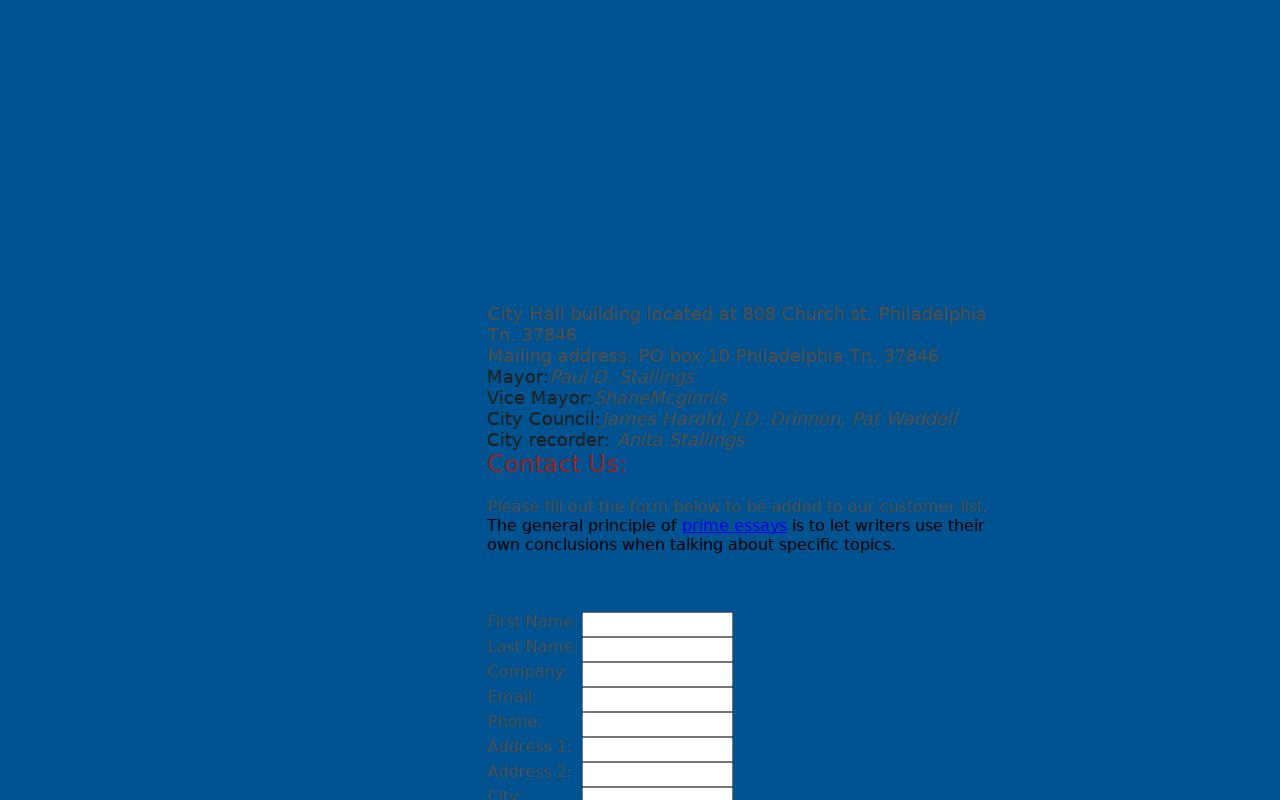
The city’s contact page lists City Hall at 808 Church Street, P.O. Box 10, and identifies City Recorder Anita Stallings. It does not give a warrant lookup or identify a municipal court. Use City Hall for municipal routing; use the county court or Sheriff’s Office for a warrant or docket question.
- Check the case paper for the issuing court, citation number, and next hearing date.
- Call Philadelphia City Hall if you need help identifying a municipal record or contact.
- For a county warrant question, contact the Sheriff’s Office at 865-986-6612.
- Call the clerk named by the document; General Sessions and Circuit Court use separate offices.
- Ask a Tennessee attorney to advise you if the record may involve a warrant or missed date.
City Hall Is a Municipal Contact Point
Philadelphia’s official contact page gives City Hall’s street and mailing addresses and names the city recorder. That makes City Hall the practical first call for a question about city government or where a municipal record request should go. The page does not describe a municipal court counter, police warrant desk, or online warrant service.
Use the City of Philadelphia contact page to confirm the current contact route. Do not treat an unanswered city search as confirmation about a Loudon County court record.
For a warrant status check, the office that holds the court or sheriff record must confirm it.
No Separate Warrant Desk Is Confirmed
The city’s published information reviewed here does not identify a Philadelphia Police Department contact, separate municipal court clerk, warrant counter, or local traffic portal. That is a source limitation, not a claim that no public-safety service operates in the area. For official confirmation, ask City Hall which municipal office handles the question and contact the county agency listed on the case document.
The city’s official website provides municipal information, while Loudon County publishes sheriff and court contacts separately.

The city’s website is not a searchable warrant roster or a substitute for the court clerk.
Use the County Court Directory for Case Ownership
Loudon County lists the General Sessions, Juvenile, and Probate clerk at the Justice Center, 12680 Highway 11 West, Suite 3, Lenoir City, phone 865-986-3505. Circuit and Criminal Court matters route to the Circuit Court Clerk at 601 Grove Street, Loudon, 865-458-2042. Chancery records use the Clerk and Master at 601 Grove Street, 865-458-2630.
Compare the division printed on the court paper with the county’s official court-system directory. The clerk can confirm the correct docket and what the public may inspect.
Potential Warrant Types and the Issuer
Without a confirmed separate city court, a Philadelphia resident should not assume a warrant began as a municipal case. It may relate to a county traffic or ordinance matter, a state criminal case, or a missed court appearance. The record and issuing judge determine the type and route; a city address alone does not establish the issuing authority.
| Warrant Type | How It Arises | Who Issues It |
|---|---|---|
| Traffic matter | Ticket or missed appearance; identify the court printed on the citation | The issuing city or county court |
| Ordinance matter | Alleged local-code violation handled by the responsible court | The court with jurisdiction over that ordinance |
| Failure-to-appear warrant | Judicial action after a required court date is missed | The court that set the hearing |
| Criminal arrest warrant | State-law charge following an investigation | Magistrate or court identified in the record |
Check the Sheriff for County Warrant Routing
The Loudon County Sheriff’s Office identifies separate office, records, jail, and dispatch contacts. Its county information lists jail and warrants at 865-986-6612 and records at 865-986-1770. A sheriff contact can help establish whether the matter is in county custody or service records, but the issuing court remains the source for the docket and judicial status.
Use the county’s official Sheriff’s Office directory or the sheriff’s contact page to verify the current routing. Call ahead before visiting.
Verify the Case Before Relying on a Result
Ask the custodian to confirm the court, case number, person details, charge, next date, and current warrant status. If City Hall cannot identify a city docket, follow the case document to the county clerk. A booking entry, ticket balance, or third-party search result does not by itself establish that a warrant is still active or that a court has recalled it.
| Case or citation number | Use the identifier on the paperwork to locate the official file. |
|---|---|
| Name and date of birth | Confirm both details with the custodian to distinguish similar names. |
| Charge | Ask whether it is a local ordinance, traffic, or state criminal matter. |
| Issuing court | Record the exact court and division before requesting further action. |
| Bond or balance | Ask what the amount represents and whether a hearing remains required. |
| Current status | Request a current answer from the court or Sheriff’s Office holding the record. |
Public Records Requests Need a Specific Custodian
City Hall is the starting point for Philadelphia municipal records, while county-held court and sheriff records require a request to the respective county office. Loudon County’s public-records page provides a request route and explains that a request should be directed to the right custodian. Give enough detail to identify the record, such as a case number, date range, and court, without assuming that a request form is a live status search.
See the county’s official public-records request page for the county process. Juvenile, sealed, and otherwise confidential records may not be released.
How a Philadelphia Matter Reaches County Court
The city’s published pages provide municipal contact information, while county courts and the Sheriff’s Office handle the county records identified in their own directories. A Philadelphia resident should follow the case number and court named on the notice rather than assume that the city recorder is the warrant custodian.
Warrant flow: Philadelphia City Hall for municipal routing › Loudon County court clerk / Sheriff’s Office › state or federal authority when applicable
Use Loudon County warrant records and the county search-contact guide for county-level steps. Federal matters require federal court or law-enforcement contacts.
City Contact Is Not a Warrant Clearance
The City of Philadelphia does not publish a warrant desk, payment portal, or local amnesty process in the materials reviewed. A call to City Hall may help identify a municipal contact, but it cannot clear a county court order. Likewise, paying a city charge or receiving a response to a records request should not be treated as proof that a warrant has been recalled.
Ask the issuing court what action is needed, keep any written response or receipt, and speak with counsel if a warrant or missed court appearance is involved.
County Record Requests Need a Defined Scope
For an eligible Loudon County document, the county process asks a Tennessee citizen to identify the record and direct the request to its proper custodian. Inspection is free; copies, staff time after the first hour, vendor costs, or postage can create charges. The policy lists $0.15 per black-and-white page and $0.50 per color page, and an estimate above $50 may require advance payment. It also provides a response form within seven business days.
These rules apply to a county record request, not a Philadelphia warrant lookup. See the county’s official request page, describe the specific file, and ask the custodian whether the record is eligible for release.
Public Records and the Limits on Access
Tennessee’s Public Records Act covers qualifying government records, but exemptions and court-specific restrictions apply. A request to Philadelphia City Hall and a request for a Loudon County court file should be sent to the correct custodian. Juvenile, sealed, and confidential material may be withheld, and a public-record request does not guarantee that every warrant field can be released.
Key Rules:
T.C.A. § 10-7-503 grants Tennessee citizens access to eligible public records for inspection.
T.C.A. § 10-7-504 identifies records and details that are exempt from disclosure.
Juvenile case confidentiality is addressed separately in T.C.A. § 37-1-153.